Building the Foundation for Scalable AI
AI layers aren’t just a technical concept. They’re the foundation for sustainable, enterprise-wide AI adoption. We’ll help you get them right, so you can unlock efficiency, scalability and governance without sacrificing speed.
Why Structure Matters
Effective enterprise AI isn’t just about deploying a model. It’s about creating a structured architecture that can scale, integrate and stay under control. At the heart of this architecture are AI layers: distinct components that work together to turn raw data and compute into AI-powered applications embedded in your business workflows.
Why AI Layers Matter
Without a layered approach, AI adoption quickly becomes chaotic. Teams spin up isolated tools, security gaps emerge and costs spiral. A well-designed AI architecture solves this by:
- Centralising control: Consistent governance, compliance and security across all AI initiatives.
- Standardising integration: Connecting fragmented systems so models can access the data they need.
- Scaling efficiently: Adding new AI capabilities without breaking what already works.
What Are AI Layers?
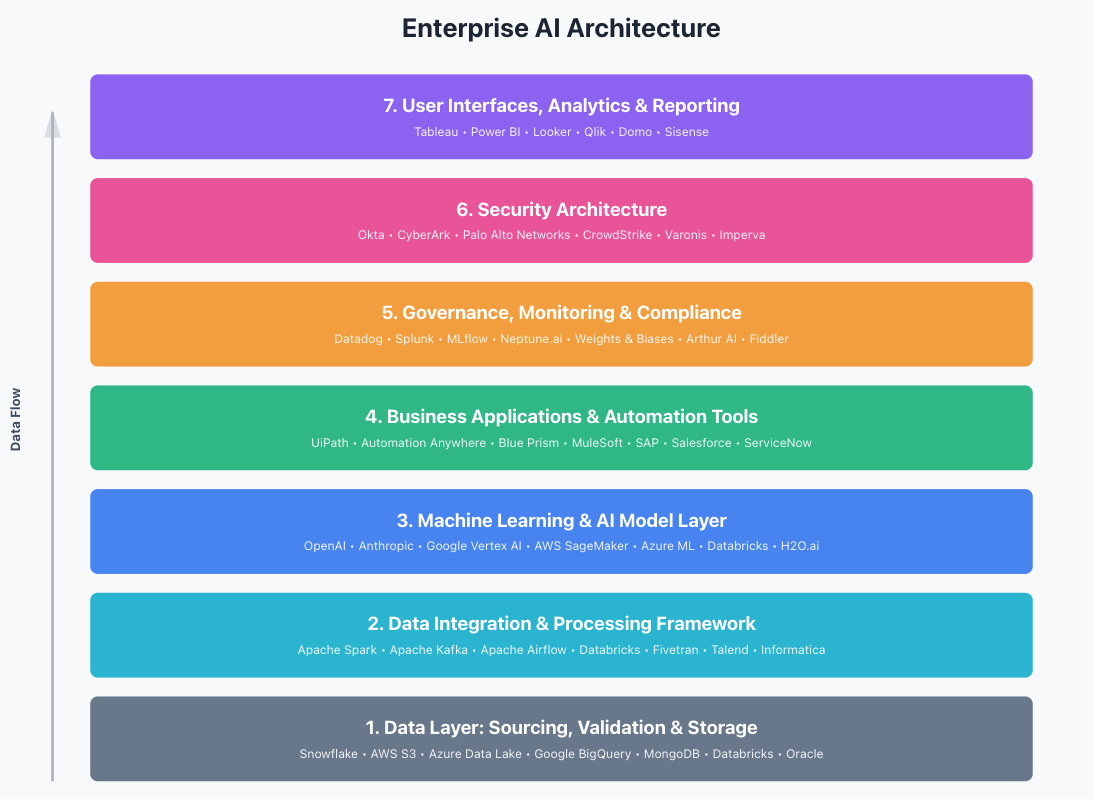
Think of AI layers as building blocks in your enterprise tech stack. Each layer has a specific role:
- Layer 1 (Foundation): Data sourcing, validation and storage
- Layer 2: Data integration and processing pipelines
- Layer 3: Machine learning models and AI infrastructure
- Layer 4: Business applications and automation
- Layer 5: Governance, monitoring and compliance
- Layer 6: Security architecture
- Layer 7 (Top): User interfaces and reporting
- Closing line: Organising AI into layers makes it easier to control, grow and connect, so every department benefits without creating silos.
Get your AI architecture right…
A layered approach to governance, integration and scale, before your AI initiatives multiply.